A conversation with Dr Alessia Zinnari
29 October 2025
18:00 – 19:30
A conversation with Dr Alessia Zinnari
29 October 2025
18:00 – 19:30
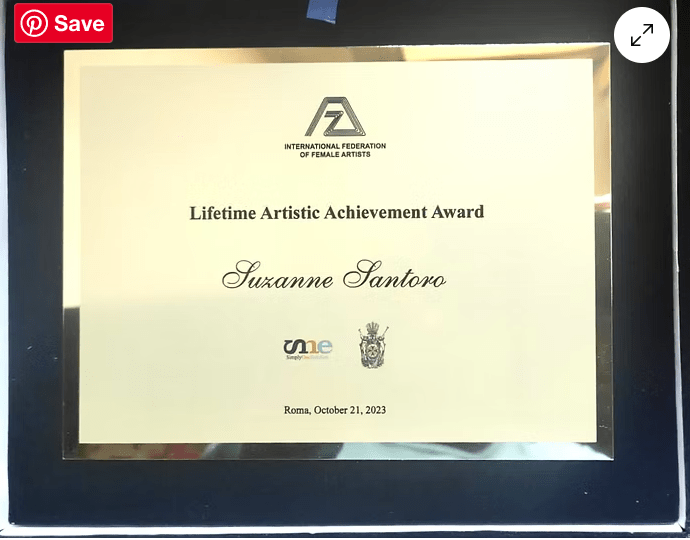
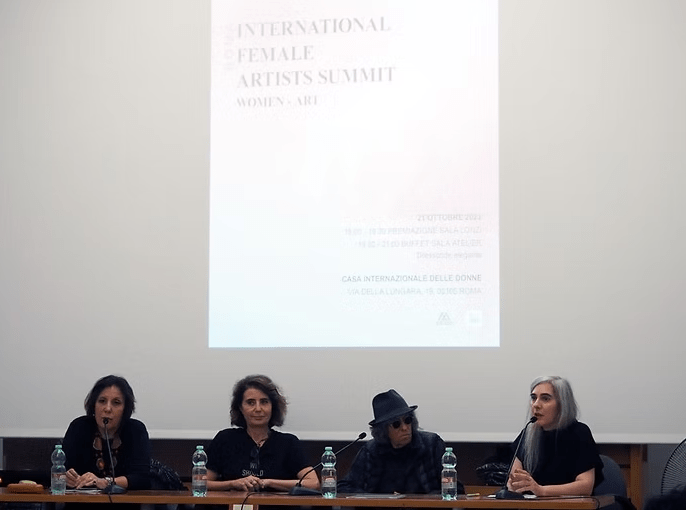
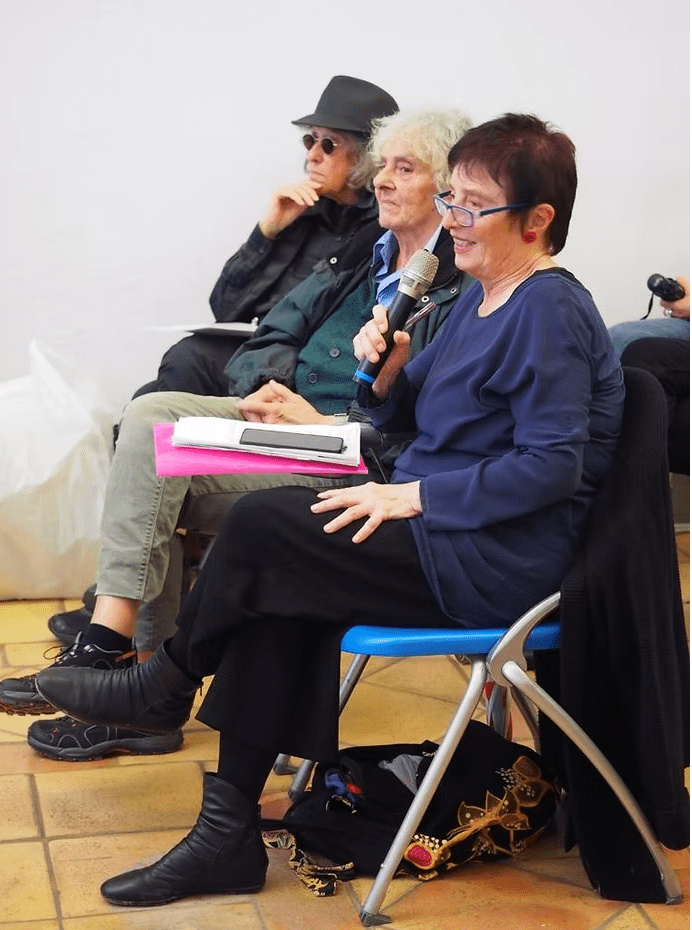
Suzanne Santoro has received the ‘Lifetime Artistic Achievement Award’ by the International Federation of Female Artists at the Casa Internazionale delle Donne in Rome on 21st October 2023.

14/05/2024
“Il Femminismo come pratica teorico critica ed artistica”.
Suzanne Santoro e Silvia Giambrone in dialogo con Paola Ugolini.

“Artiste e femminismo in Italia. Per una rilettura non egemone della storia dell’arte” di Paola Ugolini, ed. Marinotti, 2022.
It also includes the chapter: “Suzanne Santoro e l’immagine imprevista”.

Initiation song sung by the elder women as they cut off the clitoris of a young girl: “Once we were companions, I now give you orders, because I am a man, you see – and I have a knife and I will operate on you. Your clitoris, so jealously kept, I will tear it off and throw it to the ground, because I am a man, today. I have a heart of stone: otherwise I couldn’t do this. After, they will treat the wounds and so I will know many things: those who have been treated for the wounds and those who have not”.
Ritual song sung by the young girls: “Don’t talk to me like this, sisters, my heart is fearful and I am terrified to death. If I could only fly away like a bird”.[1]
My Story Then.
I left New York City in 1968 fleeing from a mad and excessively sexual tutor from art school who I couldn’t get rid of. I had been in Rome a few years earlier with Mark Rothko and his wife as a nanny to their children. He was travelling in Europe with the Marlborough galleries. I had very little time to visit Rome. The trip turned out to be very distressing for me and shortly after Rothko committed suicide in New York. So, when I finished the School of Visual Arts, I was determined to go back to Rome, to stay! The tragic lives of artists and the art world had devastated me. I had to find a solution to being an artist and staying sane. It came! It wasn’t difficult to meet Carla Lonzi; she was part of the art world and an acclaimed avant-garde art critic who had just left the art world for radical feminism!
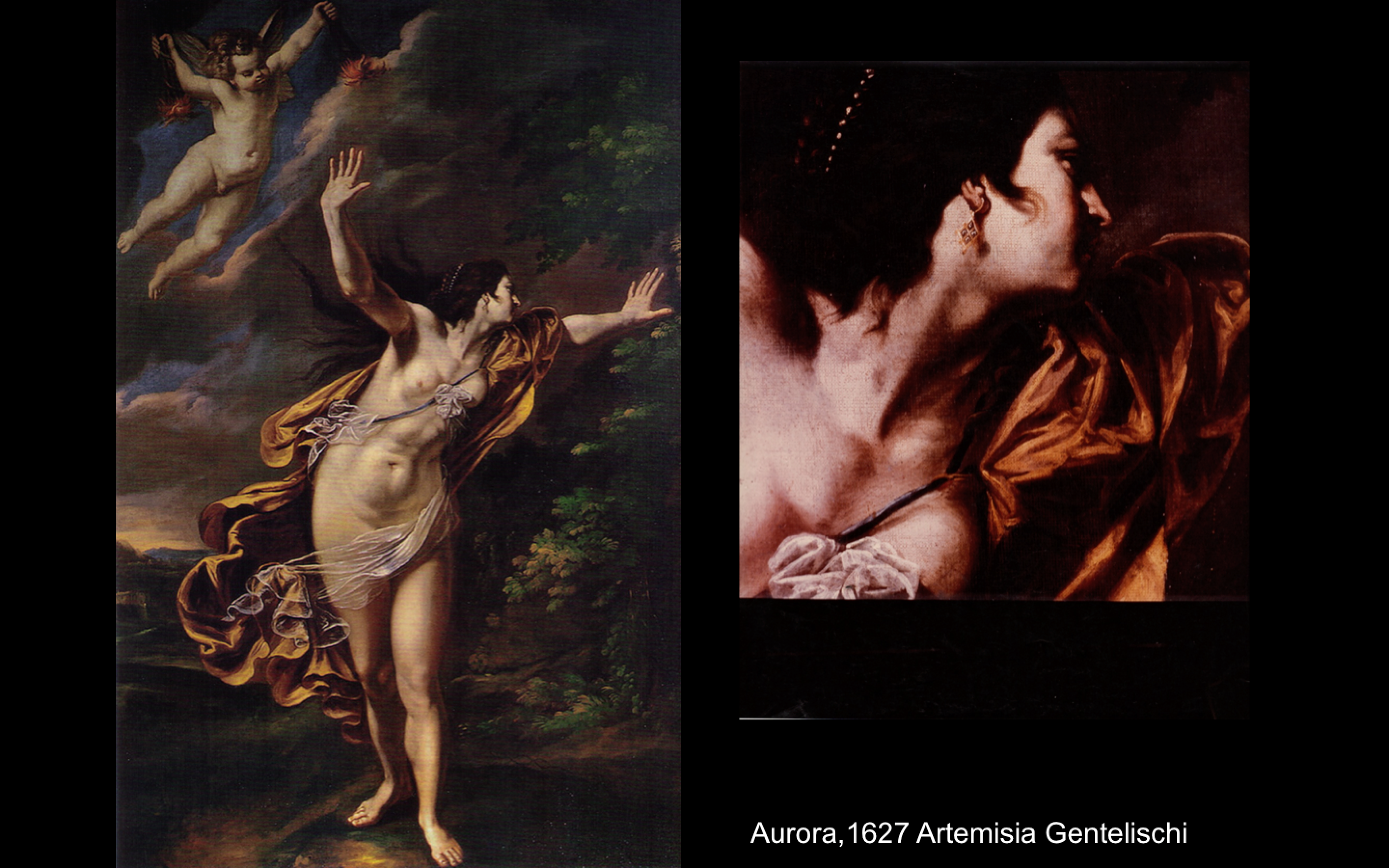
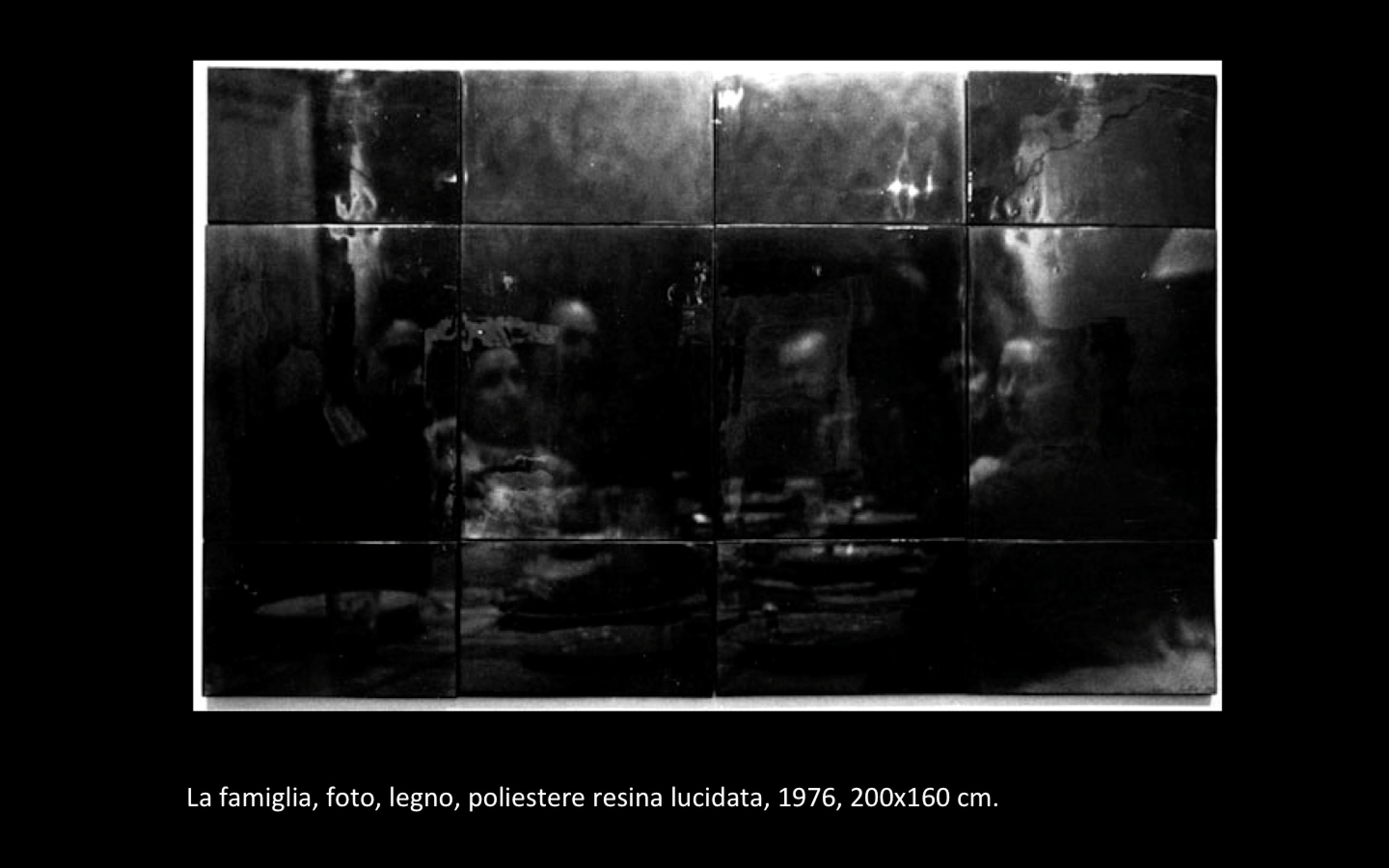
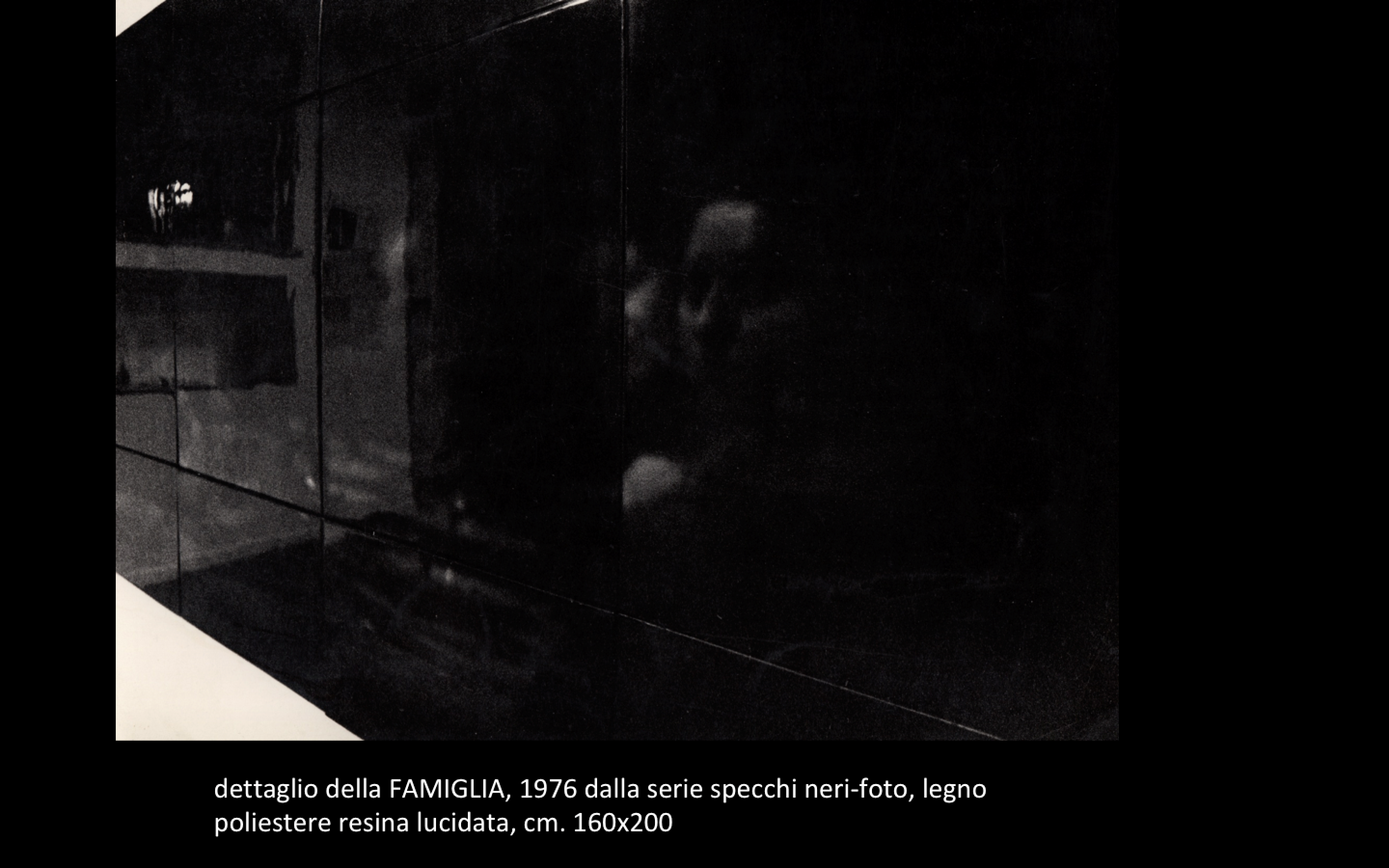
I joined her autocoscienza group Rivolta Femminile in 1971 until 1975 when the group in Rome broke up. I really needed a place where I could get some explanations to what had happened to me. With the Rivolta Femminile group in Rome I produced a booklet titled Towards New Expression. In the same years I started to make resin casts of my mount of Venus and other parts of my body. For years I worked on a Black Mirror series of self-portraits and other themes. Radical Feminism had given me a direction for my work without which I couldn’t have continued as an artist.[2] After Rivolta Femminile ended in Rome in 1975, some of us from the group started a women’s collective gallery showing contemporary women artists alternating with women artists from the past. In 1976 myself and 10 other women artists and art historians inaugurated the Cooperativa Beato Angelico with an unknown painting by Artemisia Gentileschi called The Aurora.[3]
The mid 1980s and 1990s proved to be a great delusion for radical feminism. There had been so many good changes and so much enthusiasm. I really thought it was all over. Also, things became difficult for me: a marriage break up, working full time to support myself and studying to become a child art therapist. But I was always doing my art work and exhibiting mostly in alternative spaces, and never losing contact with radical feminist friends, theory, literature, philosophy… In recent years, mostly women art historians have begun to research about that moment; they were finally asking questions about feminism and art in Italy. They were particularly interested in Carla Lonzi and why she had become a very radical feminist and stopped being an art critic. How could she do this? Many feminists said she was a traitor to women artists! She had declared tabula rasa and a complete severing from male culture. This was truly a revelation! A way out!
Carla Lonzi was exceptional, almost entrancing, soft spoken with ‘hard’ ideas. I spent almost 5 years following her in the group of Rivolta Femminile. Italian feminism then and now gives great tribute to her.
Now
I have spent the last decades painting and mostly drawing. I’m greatly influenced by the Anti-Violence Center group I’ve been collaborating with for years. Our reading group has been covering a vast range of texts: the Neolithic studies of ‘Old Europe’ by the Lithuanian Archaeomythologist, (her term) by Marija Gimbutas, The Language of The Goddess (1989), the book of Genesis, The Malleus Malificarum (1487), a manual used by the Inquisition to put to trial and condemn witches and witchcraft, and was widely printed at the time even more than the bible! The list of our studies goes on and on…
The work of Marija Gimbutas is so important because she documents ‘Old Europe’ as a pre patriarchal, equalitarian and peaceful female empowered society that used iconographic female symbolism in a multitude of statues, ceramic vases, architecture and female royal burials… for thousands of years. She also writes of a Neolithic female based religion with a quasi-written language.
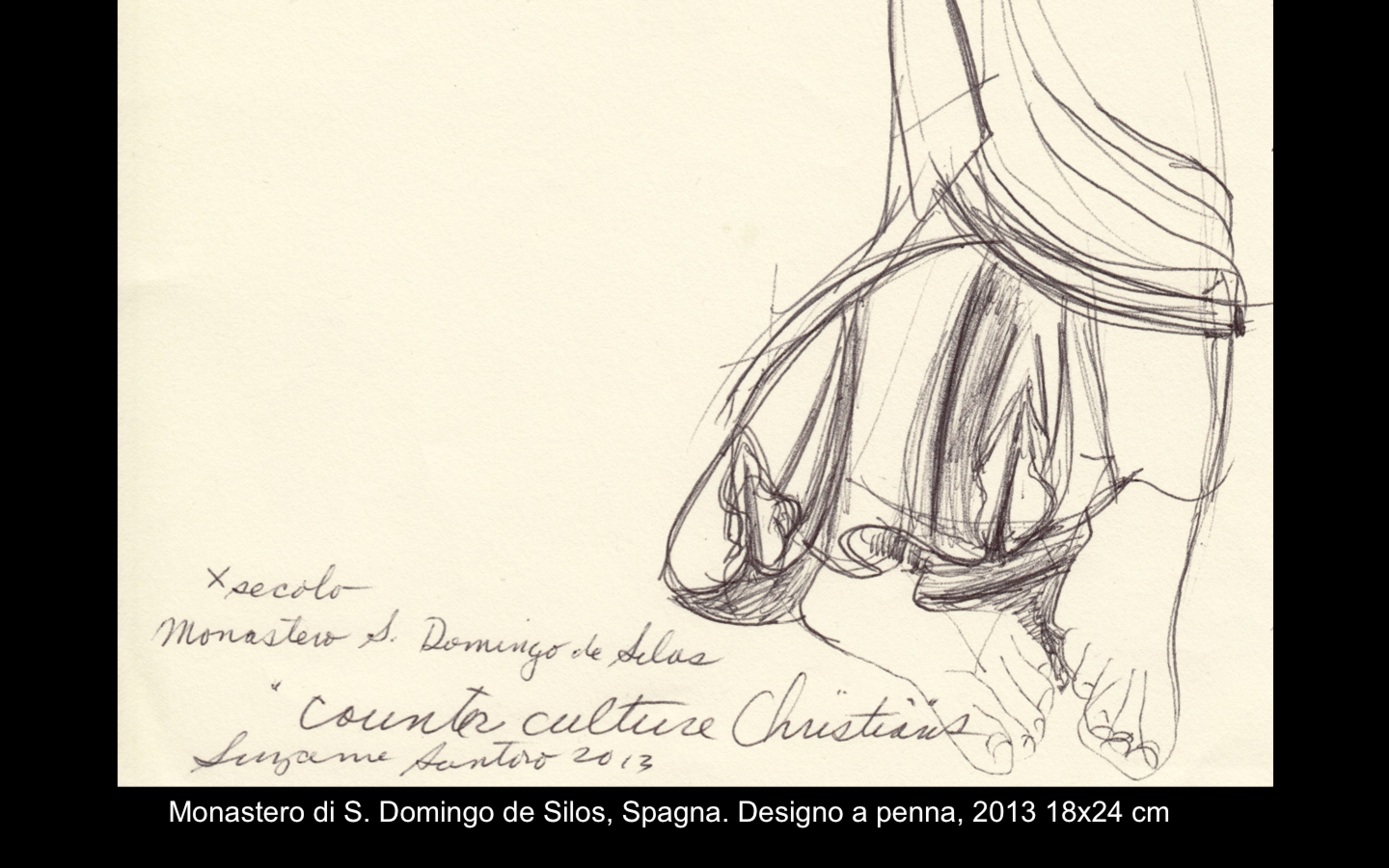
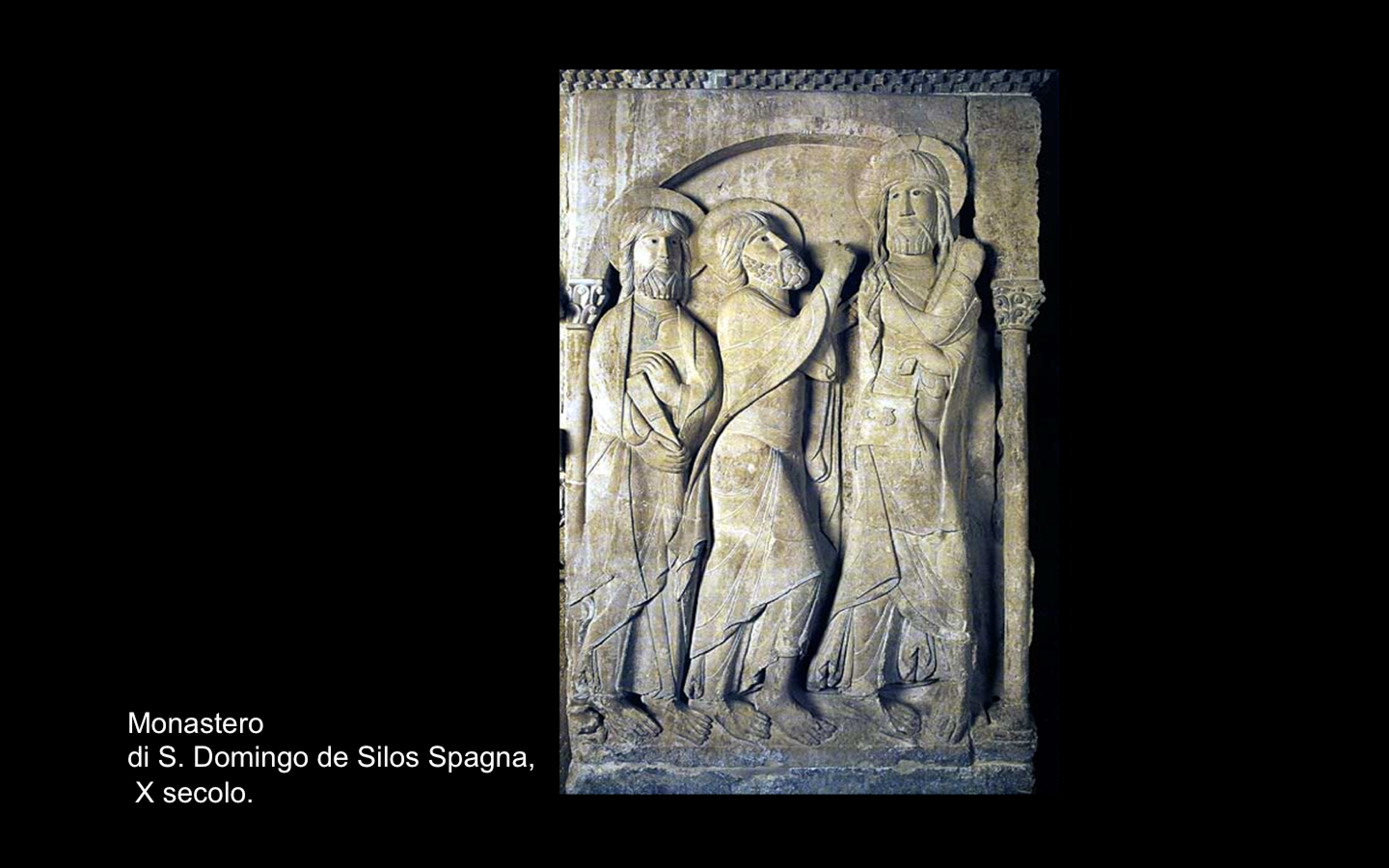
The premise for me is that this female iconography has never been lost, only hidden. I’ve been searching and making drawings from Medieval miniatures and through art history. One was Adam and Eve but the snake’s head was a dolphin’s head peering at Eve! This may refer to the original oracle performed by a young girl at Delphi. I titled my drawing To Pythia, Dear Delphi.
A list of other suppressed histories I’ve found and made drawings from:
● Classical Greek vases with a woman painting on a vase.
● Groups of only women midwives tending women giving birth painted on Classical Greek vases.
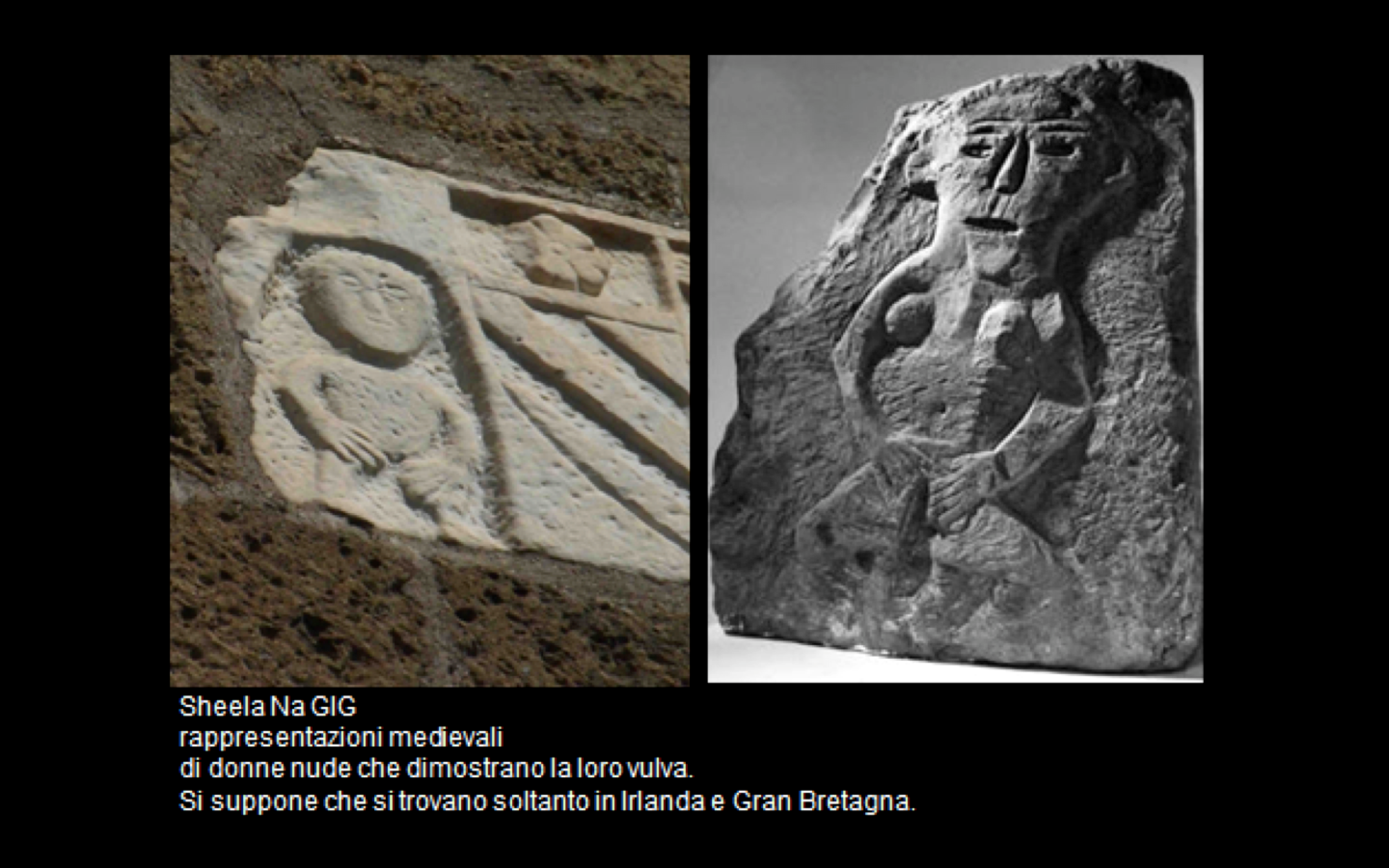
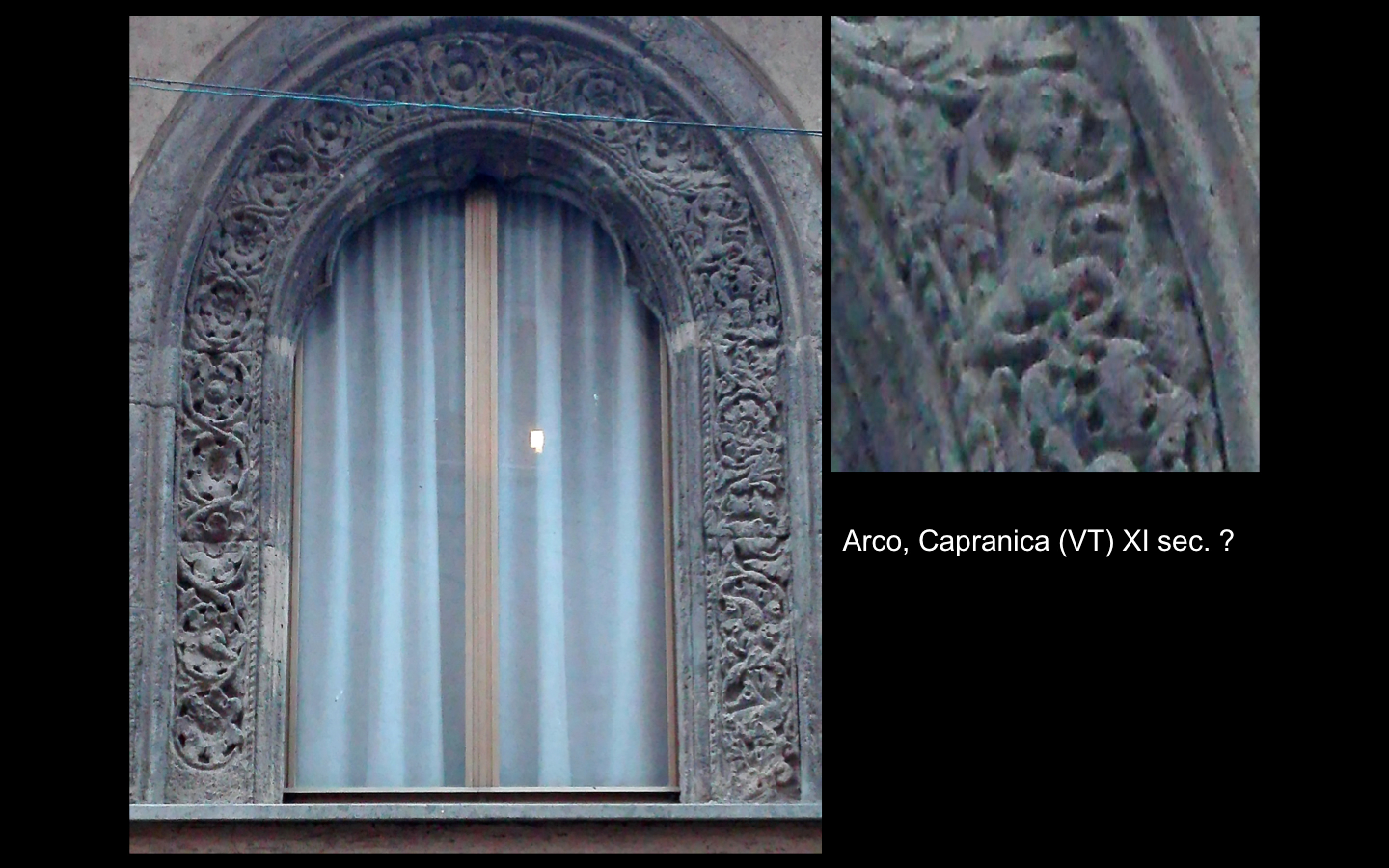
● I have found many hidden Sheela Na Gigs[4] in Medieval ornamental details on churches even in central and southern Italy.
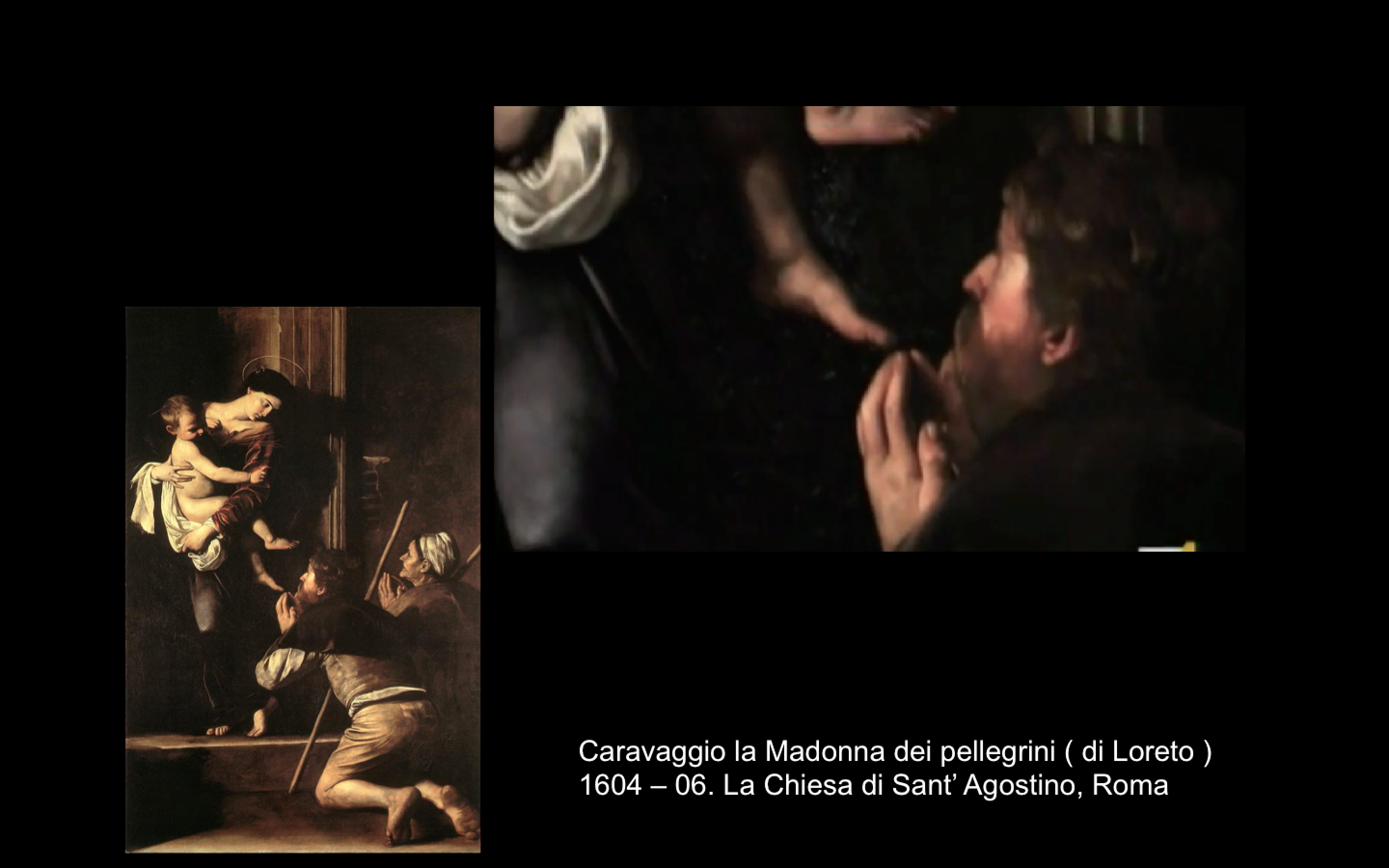
● There is the head of a black panther in the center of Caravaggio’s painting of the Madonna di Loreto (Madonna dei Pellegrini) (1604-6) in the church of Sant’Agostino in Campo Marzio. This area of Rome was home to a large temple dedicated to Isis, the great female Egyptian goddess of religion, Bastet. The Black Panther is a universal symbol of female power.
Original female iconography and symbolism has persisted right through patriarchy even when censored. The question is: Have the representations of the Sacred Female in all its profound symbolism been totally obliterated today?
I gave this talk at a conference at the opening of the exhibition Feminist Avant-Garde of the 1970s. Works from the Verbund Collection, The Photographers’ Gallery, London (October 2016), curated by Gabriele Schor who is the director of the Collection.
[1] Carla Lonzi, ‘The Clitoral Woman and The Vaginal Woman’, Rome: Rivolta Femminile, 1971.
[2] For details of my work of that period see Giovanna Zapperi, Carla Lonzi, Un’Arte della Vita, Rome: DeriveApprodi, 2017.
[3] See Katia Almerini, ‘The Cooperativa Beato Angelico. A Feminist Art Space in 1970s Rome’, Feminism and Art in Postwar Italy: The Legacy of Carla Lonzi, eds, Francesco Ventrella and Giovanna Zapperi, London: Bloomsbury 2020.
[4] Medieval sculptures of naked women displaying their vulva mostly found in Ireland and Great Britain.
Viterbo, Auditorium polo culturale Valle Faul ERINNA
14 FEBBRAIO- 18 DICEMBRE 2020
With Suzanne Santoro’s participation


Sonia Khurana, Logic of Birds. Courtesy of the artist
Doing Deculturalization is inspired by the writings of the Italian art historian and critic Carla Lonzi (1931–1982). In particular, it focuses on using her concept of deculturalization, a way of (culturally) decoding life, labor and language, as a prerequisite for an antiregulatory and decolonial vision of gender and migration. The processes of withdrawal and alienation connected to this concept are highlighted both in reference to their historical feminist context and in possible ways of applying them to the present. So, the project is basically asking, to what extent can “deculturalization” processes liberate forms of empowerment and resistance. In other words, how can they develop a critique of the colonializing power structures? Against the backdrop of this question, the exhibition creates a speculative scenario, a topography of associations between archive material from feminist movements and contemporary and historic artistic positions with a particular focus on material from the Archivio di Nuova Scrittura in the Museion Collection.
Curated by Ilse Lafer, guest curator 2019 at Museion.
In collaboration with: Sabeth Buchmann (congress/workshop), Frida Carazzato, Francesca Lacatena (curatorial advisors), Lukas Maria Kaufmann (exhibition design), Brigitte Unterhofer e team (exhibition organization and production).
Artists e archives
Carla Accardi , Zehra Arslan, Marion Baruch, Moyra Davey, Bracha L. Ettinger, Claire Fontaine, Chiara Fumai, Nadira Husain, Sonia Khurana, Ketty La Rocca, Beatrice Marchi, Marisa Merz, Margherita Morgantin, Ariane Müller, Raffaela Naldi Rossano, Rosa Panaro, Gina Pane, Marinella Pirelli, Carol Rama, Cloti Ricciardi, Suzanne Santoro, Katarina Zdjelar.
Archivio di Nuova Scrittura – Collezione Paolo Della Grazia, MUSEION Bolzano/Bozen and Mart, Museo di arte moderna e contemporanea di Trento e Rovereto
Amelia Etlinger, Carla Accardi, Giovanna Sandri, Irma Blank, Lucia Marcucci, Giulia Niccolai, Mirella Bentivoglio, Marilla Battilana, Grögerová Bohumila, Tomaso Binga, Elisabetta Gut, Anna Oberto, Liliana Landi, Sveva Lanza, Ketty La Rocca, Francoise Janicot, Nanda Vigo, Lenora De Barros, Raffaella Formenti, Berty Skuber.
Donazione Mirella Bentivoglio – Mart, Museo di arte moderna e contemporanea di Trento e Rovereto
Annalisa Alloatti, Marilla Battilana, Mirella Bentivoglio, Tomaso Binga, Paula Claire, Hanne Darboven, Betty Danon, Neide Dias de Sá, Amelia Etlinger, Maria Ferrero Gussago, Kiki Franceschi, Elisabetta Gut, Ana Hatherly, Ketty La Rocca, Maria Lai, Sveva Lanza, Lucia Marcucci, Anna Oberto, Giovanna Sandri, Mira Schendel, Greta Schödl, Berty Skuber, Simona Weller; libri d’artista (di Annalies Klophaus, Agnes Denes, Katalin Ladik, Irma Blank, Simona Weller, Ana Hatherly et al.), materiale d’archivio
Fondo Suzanne Santoro, ARCHIVIA Archivi Biblioteche Centri Documentazione delle Donne, Roma
Archival records
Archivio Carla Lonzi, Galleria nazionale d’arte moderna e contemporanea di Roma
http://www.museion.it/2019/04/doing-deculturalization-working-title/?lang=en

The Unexpected Subject: 1978 Art and Feminism in Italy
Il Soggetto Imprevisto: 1978 Arte e Femminismo in Italia
April 4–May 26, 2019
Opening: April 4, 8–11:30pm, free admission
Special openings: April 5–7, during Milan Art Week, free admission
FM Center for Contemporary Art presents The Unexpected Subject. 1978 Art and Feminism in Italy, a new exhibition curated by Marco Scotini and Raffaella Perna, proposing for the first time a wide-ranging investigation and a precise reconstruction of the relationship between visual arts and feminist movement in Italy, identifying in 1978 the catalyst year of all energies in play (not only in Italy). The exhibition is realized in collaboration with MART Museum of Trento and Rovereto and Frittelli Arte Contemporanea. The catalogue will be edited by the media partner Flash Art. The exhibition is sponsored by Dior.
In June 1978, with the exhibition Materialization of Language curated by Mirella Bentivoglio, over 80 women artists make their entrance to the Venice Biennale for the first time, loudly claiming space and visibility in a place traditionally very difficult for women to conquer. In the same edition of the Biennale, an anthological exhibition was dedicated to Ketty La Rocca. At the Magazzini del Sale, the Biennale also gave space to the “Immagine” group of Varese and the “Women / Image / Creativity” group of Naples.
This year also marks the closing of some important experiences related to art and women’s movement. In 1978 the group Cooperativa Beato Angelico in Rome—the first artistic space entirely run by women, fueled by Carla Accardi after the end of her collaboration with Carla Lonzi—interrupted its activities. Still in 1978, Romana Loda, curator and gallerist of Brescia, organized The Left Face of Art, the last of some landmark exhibitions organized throughout the decade, including Coazione a Mostrare and Magma, in which Italian women artists were presented together with the most significant artists of the European scene.
The Unexpected Subject. 1978 Art and Feminism in Italy will present for the first time one of the most interesting scenes of experimental research in the 1970s to the international public, highlighting the centrality of women in the Italian art scene of that period, and their exchanges with the artistic panorama of Europe and beyond. The exhibition criticizes the mainstream historical-critical view that relegates women artists to a marginal position. The works will be lend by private collections and institutions, the artists and their archives and important Italian public institutions and museums, like the MART Museum of Trento and Rovereto, MADRE Museum of Napoli, CAMeC of La Spezia.
“We recognize within ourselves the capacity for effecting a complete transformation of life. Not being trapped within the master-slave dialectic, we become conscious of ourselves; we are the Unexpected Subject.” (Carla Lonzi, Let’s Spit on Hegel, 1974).
Exhibited artists: Marina Abramović, Carla Accardi, Paola Agosti, Bundi Alberti, Annalisa Alloatti, Liliana Barchiesi, Mirella Bentivoglio, Valentina Berardinone, Cathy Berberian, Renate Bertlmann, Tomaso Binga, Irma Blank, Diane Bond, Marcella Campagnano, Françoise Canal, Lisetta Carmi, Paula Claire, Mercedes Cuman, Dadamaino, Betty Danon, Hanne Darboven, Agnese De Donato, Jole De Freitas, Agnes Denes, Chiara Diamantini, Neide Dias de Sá, Lia Drei, Anna Esposito, Amelia Etlinger, Maria Ferrero Gussago, Giosetta Fioroni, Simone Forti, Rimma Gerlovina, Natal’ja Sergeevna Gončarova, Nicole Gravier, Pat Grimshaw, Bohumila Grögerová, Gruppo Femminista “Immagine” (Silvia Cibaldi, Milli Gandini, Clemen Parrocchetti, Mariuccia Secol, Mariagrazia Sironi), Gruppo “Donne/Immagine/Creatività” (Mathelda Balatresi, Ela Caroli, Rosa Panaro, Bruna Sarno, Anna Trapani), Gruppo XX (Mathelda Balatresi, Antonietta Casiello, Rosa Panaro, Mimma Sardella), Nedda Guidi, Elisabetta Gut, Micheline Hachette, Ana Hatherly, Rebecca Horn, Sanja Iveković, Joan Jonas, Annalies Klophaus, Janina Kraupe, Ketty La Rocca, Katalin Ladik, Maria Lai, Liliana Landi, Sveva Lanza, Paola Levi Montalcini, Natalia LL, Lucia Marcucci, Paola Mattioli, Libera Mazzoleni, Gisella Meo, Marisa Merz, Annabella Miscuglio, Verita Monselles, Adriana Monti, Aurelia Munõz, Giulia Niccolai, Anna Oberto, Stephanie Oursler, Anésia Pacheco e Chaves, Anna Paci, Gina Pane, Giulio Paolini, Jennifer Pike Cobbing, Marguerite Pinney, Bogdanka Poznanović, Betty Radin, Carol Rama, Regina, Cloti Ricciardi, Giovanna Sandri, Suzanne Santoro, Mira Schendel, Carolee Schneemann, Greta Schödl, Eleanor Schott, Berty Skuber, Mary Ellen Solt, Wendy Stone, Chima Sunada, Salette Tavares, Biljana Tomić, Silvia Truppi, VALIE EXPORT, Patrizia Vicinelli, Jacqueline Vodoz, Gisela von Frankenberg, Simona Weller, Francine Widmer, Francesca Woodman.
FM Centre for Contemporary Art is promoted by Open Care, the only company in Italy offering integrated services for the management and conservation of art.
https://www.e-flux.com/announcements/255745/the-unexpected-subject-1978-art-and-feminism-in-italy/
Helen Chadwick
Beatrice Marchi
Rosa Panaro
Suzanne Santoro
Curated by Francesca Lacatena
Opening Friday 27th April 6-9pm
Exhibition 28.04. – 26.05.18
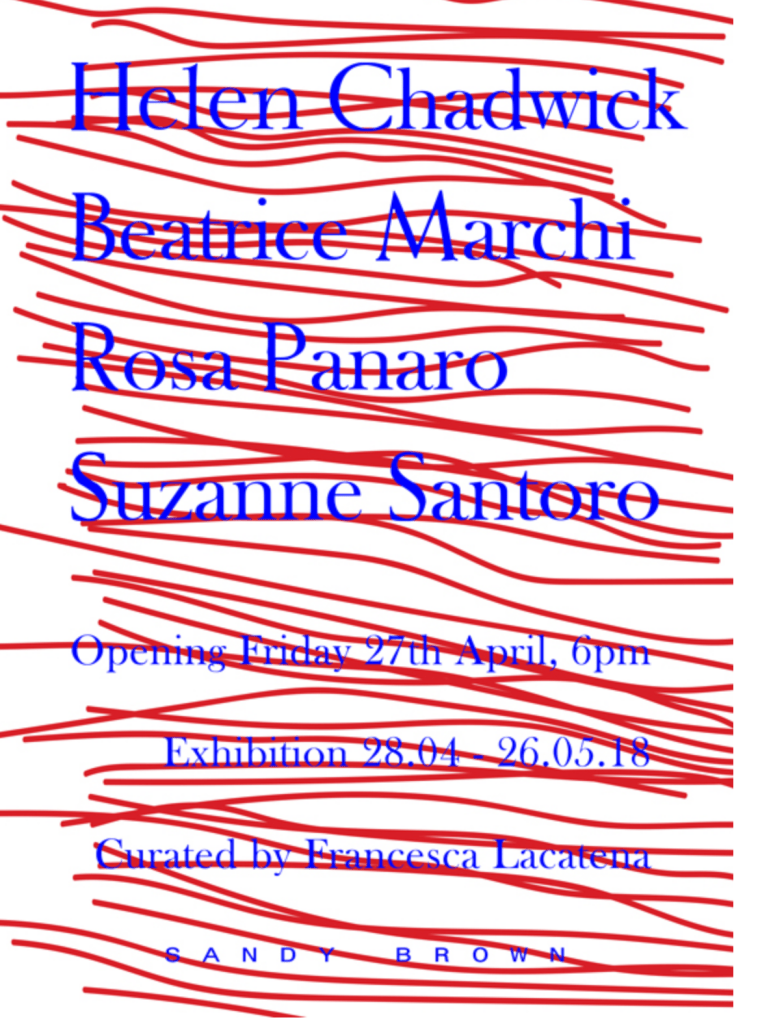
SANDY BROWN is delighted to present an exhibition curated by Francesca Lacatena featuring works by artists Helen Chadwick, Beatrice Marchi, Rosa Panaro, and Suzanne Santoro.This unusual collision of experiences in art production is the result of extended research and dialogue beginning with the question of whether the return of “feminist art” has any potential to imagine the feminist past and its continuity differently.In an essay published in Studio International in February 1976, art critic Anne-Marie Sauzeau-Boetti says: “When women’s art explicitly accuses and vindicates, it re-enters the legible cultural space as militancy; and in order to be antagonistic (a type of dialogue), it has to recompose itself artificially (for instance through a “provocative” use of Pop technique), which means betraying the basic disunity, “negativity” and otherness of woman’s experience. I do acknowledge feminist group expression as a rich militant instrument, in the way Chilean and Portuguese “murales” are a renewed political praxis; but I don’t believe in “feminist art” since art is a mysterious filtering process which requires the labyrinths of a single mind, the privacy of alchemy, the possibility of exception and unorthodoxy, rather than rule.”
In a brief yet prolific career Helen Chadwick (1953-1996, London) created groundbreaking work in performance, photography, and sculpture. Her unique hybrid of advanced technical form and conceptual documentation, from ‘Ego Geometria Sum The Labours I – X’ (1983-86) to the ‘Piss Flowers’ (1991-92), provides fugitive and potent traces of the artist’s inscription of her own body onto her work. The materials Chadwick utilised were unspectacular, but often visceral – treated leather or fur, animal flesh, chocolate, earthworms, rotting vegetables, liquid detergent, microscopic shots of viruses or bodily substances. Such items were re-introduced into Chadwick’s order and brought into uncomfortable proximity to generate ambivalent results, at once, irritating, attractive, and repulsive. The work of Helen Chadwick can be found in major international collections including the Tate Collection, London; Victoria & Albert Museum, London; and MoMA, New York.
A fictional character named Loredana has been reinforcing Beatrice Marchi’s (*1986, Gallarate, Italy) tendency to become someone else (or perhaps everyone else), including her dog Mafalda. Loredana first came to life in a short video animation that Marchi released in 2016 for her solo exhibition at Hester, New York. Marchi later played Loredana in a performance at Galerie der Stadt Schwaz, Austria, where she served chips and drinks wearing a pair of fibreglass claws whilst viewers were told the story of a young woman who wanted to become a waitress. Loredana’s pale pink limbs appeared again at the Hochschule für bildende Künste Hamburg, on the occasion of Marchi’s MA degree show; and at Kaya House, Museo Madre, Naples, where Loredana, assisted by Davide Stucchi, gave Kerstin Braetsch a chamomile massage. “Loredana gets by doing every kind of job” claims Marchi, and adds “she can learn quickly”. A couple of framed black reflective screens made by Marchi elaborate on this narrative in a more elusive manner – these works have been used as functional side tables and also shown as mysterious black holes hanging on gallery walls. Are they Loredana’s eyes or body orifices?
Rosa Panaro (*1934, Casal di Principe, Italy) works with materials such as concrete, papier-mâché, clay, and resins. By the late fifties, she had begun to manipulate the techniques learned from her maestro, the sculptor Antonio Venditti, and deviate from post-war abstractionism to find a more whimsical treatment of material and form. Panaro’s use of papier-mâché in particular anticipates the emergence of artistic experiments dealing with the art object and commodification – as later became significant to Pop Art and Nouveau Réalisme. In 1977 Panaro began a series of collaborative activities with feminist collectives such as Gruppo XX and Gruppo Donne / Immagine / Creatività, which produced numerous itinerant actions including “Vaso di Pandora” and “Lavoro Nero – Lavoro Creativo”. During these years she also contributed to the subversive magazine Effe.
Suzanne Santoro (*1946, New York) moved to Rome in the early 1970s and since then has been active as an artist. Her long-lasting friendship with art critic and activist Carla Lonzi had strong repercussions on her practice. In 1974 she produced the controversial book “Towards New Expression” (published by Rivolta Femminile). Fundamental is her contribution to the Cooperativa Beato Angelico in Rome – the first permanent space in Italy dedicated to female artists – which was established in 1976 by the union of eleven women together with the informal participation of art critic Anne-Marie Sauzeau-Boetti. Santoro’s latest drawings expand her in-depth studies of ancient and classical art, concentrating on female statuary and architectural details, so as to illuminate the significance of obscured iconography and overwritten symbols with a desecrating poignance.~
* During Gallery Weekend Berlin *
– on Saturday 28th and Sunday 29th April –
The exhibition will have extended visiting hours of 11am-7pm
SANDY BROWN
Goebenstrasse 7
10783 Berlin
http://www.sandy-brown.com
mail@sandy-brown.com
tel. +49 151 2164 0399
* During Gallery Weekend Berlin *
– on Saturday 28th and Sunday 29th April –
The exhibition will have extended visiting hours of 11am-7pm
A few weeks ago the book All-Women Art Spaces in Europe in the Long 1970s was published by Liverpool University Press.
It also includes my story and the genealogy of women artists-only exhibitions, festivals, collective art projects, groups and associations organized in the 1970s in Europe (1968-1984). The book covers examples from Italy, Spain, The UK, Portugal, Austria, Poland, Denmark, Germany (East and West), The Netherlands, France and Sweden. You’ll find out about my experience in the formation of the Cooperativa Beato Angelico in Rome in the essay ‘Women’s Art Spaces: Two Mediterranean Case Studies’ written by art historian Katia Almerini.

All-women art spaces in Europe in the long 1970s
Edited by Agata Jakubowska (Associate Professor at the Adam Mickiewicz University in Poznań, Polanad) and Katy Deepwell (Professor of Contemporary Art, Theory and Criticism at Middlesex University, London)
2018 Liverpool Uni
versity Press – ISBN: 9781786940582

EXHIBITION
Dal 25 gennaio al 2 aprile 2018 l’Istituto Centrale per la Grafica di Roma ospita la mostra MAGMA. Il corpo e la parola nell’arte delle donne tra Italia e Lituania dal 1965 ad oggi, curata da Benedetta Carpi de Resmini e Laima Kreivytė. Il progetto MAGMA, il cui titolo riprende quello di una delle prime rassegne al femminile curata da Romana Loda nel 1977, intende approfondire la nascita e l’origine dell’arte femminista e del femminismo in Italia, mettendole a confronto con le origini e le diverse condizioni del femminismo Lituano, nato in anni molto più recenti, così da aprire nuove e più documentate prospettive di studio che approfondiscano una delle pagine più originali e controverse della nostra storia recente.
In esposizione le opere realizzate da artiste come Mirella Bentivoglio, Tomaso Binga, Suzanne Santoro e Kristina Inčiūraitė, Paulina Pukitė, Eglė Rakauskaitė, Marija Teresė Rožanskaitė, Chiara Fumai, Giosetta Fioroni, Nicole Gravier, Maria Lai, Ketty La Rocca, Lucia Marcucci, Elisa Montessori e tante altre ancora.
Sede dell’evento Roma, Palazzo Poli, via Poli, 54
Date 26 gennaio – 2 aprile 2018
Apertura al pubblico – ore 14,00 – 19,00 mercoledi – domenica (ultimo ingresso ore 18.30)

Suzanne Santoro at the The SAMMLUNG VERBUND Collection exhibition in Vienna
Press Conference
16th November 2017, 11.00 a.m.
Opening
17th November 2017, 7.00 p.m.
on the exhibition
Peter Weibel
Chairman and CEO, ZKM | Zentrum für Kunst und Medien, Karlsruhe
Gabriele Schor
Founding Director, SAMMLUNG VERBUND Collection, Vienna
Lecture & Artist Talk
18th November 2017, 2.30 p.m. – 6.00 p.m.
Why is it important to call the feminist art movement an ‘avant-garde’?
by Gabriele Schor with Linda Christanell, Renate Eisenegger, Karin Mack,
Ewa Partum, Margot Pilz, Annegret Soltau (in German)
and Kirsten Justesen, ORLAN, Lydia Schouten (in English)
ZKM | Zentrum für Kunst und Medien, Karlsruhe
Lorenzstraße 19
76135 Karlsruhe
50 participating artists
Helena Almeida, Eleanor Antin, Anneke Barger, Lynda Benglis, Judith Bernstein, Renate Bertlmann, Teresa Burga, Marcella Campagnano, Judy Chicago, Linda Christanell, Lili Dujourie, Mary Beth Edelson, Renate Eisenegger, VALIE EXPORT, Esther Ferrer, Lynn Hershman Leeson, Alexis Hunter, Sanja Iveković, Birgit Jürgenssen, Kirsten Justesen, Ketty La Rocca, Leslie Labowitz, Katalin Ladik, Brigitte Lang, Suzanne Lacy, Suzy Lake, Natalia LL, Karin Mack, Ana Mendieta, Rita Myers, Lorraine O’Grady, ORLAN, Gina Pane, Letítia Parente, Ewa Partum, Friederike Pezold, Margot Pilz, Ulrike Rosenbach, Martha Rosler, Suzanne Santoro, Carolee Schneemann, Lydia Schouten, Cindy Sherman, Penny Slinger, Annegret Soltau, Betty Tompkins, Hannah Wilke, Martha Wilson,
Francesca Woodman, Nil Yalter.
Initiation song sung by the elder women as they cut off the clitoris of a young girl: “Once we were companions, I now give you orders, because I am a man, you see – and I have a knife and I will operate on you. Your clitoris, so jealously kept, I will tear it off and throw it to the ground, because I am a man, today. I have a heart of stone: otherwise I couldn’t do this. After, they will treat the wounds and so I will know many things: those who have been treated for the wounds and those who have not”.
[Ritual song sung by the young girls: “Don’t talk to me like this, sisters, my heart is fearful and I am terrified to death. If I could only fly away like a bird”].[1]
My Story Then.
I left New York City in 1968 fleeing from a mad and excessively sexual tutor from art school who I couldn’t get rid of. I had been in Rome a few years earlier with Mark Rothko and his wife as a nanny to their children. He was travelling in Europe with the Marlborough galleries. I had very little time to visit Rome. The trip turned out to be very distressing for me and shortly after Rothko committed suicide in New York. So, when I finished the School of Visual Arts, I was determined to go back to Rome, to stay! The tragic lives of artists and the art world had devastated me. I had to find a solution to being an artist and staying sane. It came! It wasn’t difficult to meet Carla Lonzi; she was part of the art world and an acclaimed avant-garde art critic who had just left the art world for radical feminism!
I joined her autocoscienza group Rivolta Femminile in 1971 until 1975 when the group in Rome broke up. I really needed a place where I could get some explanations to what had happened to me. With the Rivolta Femminile group in Rome I produced a booklet titled Towards New Expression. In the same years I started to make resin casts of my mount of Venus and other parts of my body. For years I worked on a Black Mirror series of self-portraits and other themes. Radical Feminism had given me a direction for my work without which I couldn’t have continued as an artist.[2] After Rivolta Femminile ended in Rome in 1975, some of us from the group started a women’s collective gallery showing contemporary women artists alternating with women artists from the past. In 1976 myself and 10 other women artists and art historians inaugurated the Cooperativa Beato Angelico with an unknown painting by Artemisia Gentileschi called The Aurora.[3]
The mid 1980s and 1990s proved to be a great delusion for radical feminism. There had been so many good changes and so much enthusiasm. I really thought it was all over. Also, things became difficult for me: a marriage break up, working full time to support myself and studying to become a child art therapist. But I was always doing my art work and exhibiting mostly in alternative spaces, and never losing contact with radical feminist friends, theory, literature, philosophy… In recent years, mostly women art historians have begun to research about that moment; they were finally asking questions about feminism and art in Italy. They were particularly interested in Carla Lonzi and why she had become a very radical feminist and stopped being an art critic. How could she do this? Many feminists said she was a traitor to women artists! She had declared tabula rasa and a complete severing from male culture. This was truly a revelation! A way out!
Carla Lonzi was exceptional, almost entrancing, soft spoken with ‘hard’ ideas. I spent almost 5 years following her in the group of Rivolta Femminile. Italian feminism then and now gives great tribute to her.
Now
I have spent the last decades painting and mostly drawing. I’m greatly influenced by the Anti-Violence Center group I’ve been collaborating with for years. Our reading group has been covering a vast range of texts: the Neolithic studies of ‘Old Europe’ by the Lithuanian Archaeomythologist, (her term) by Marija Gimbutas, The Language of The Goddess (1989), the book of Genesis, The Malleus Malificarum (1487), a manual used by the Inquisition to put to trial and condemn witches and witchcraft, and was widely printed at the time even more than the bible! The list of our studies goes on and on…
The work of Marija Gimbutas is so important because she documents ‘Old Europe’ as a pre patriarchal, equalitarian and peaceful female empowered society that used iconographic female symbolism in a multitude of statues, ceramic vases, architecture and female royal burials… for thousands of years. She also writes of a Neolithic female based religion with a quasi-written language.
The premise for me is that this female iconography has never been lost, only hidden. I’ve been searching and making drawings from Medieval miniatures and through art history. One was Adam and Eve but the snake’s head was a dolphin’s head peering at Eve! This may refer to the original oracle performed by a young girl at Delphi. I titled my drawing To Pythia, Dear Delphi.
A list of other suppressed histories I’ve found and made drawings from:
Original female iconography and symbolism has persisted right through patriarchy even when censored. The question is: Have the representations of the Sacred Female in all its profound symbolism been totally obliterated today?
I gave this talk at a conference at the opening of the exhibition Feminist Avant-Garde of the 1970s. Works from the Verbund Collection, The Photographers’ Gallery, London (October 2016), curated by Gabriele Schor who is the director of the Collection.
©Suzanne Santoro
Suzanne Santoro’s works are now part of the SAMMLUNG VERBUND Collection “Feminist Avant-Garde of the 1970s”, curated by Gabriele Schor, in touring exhibitions.
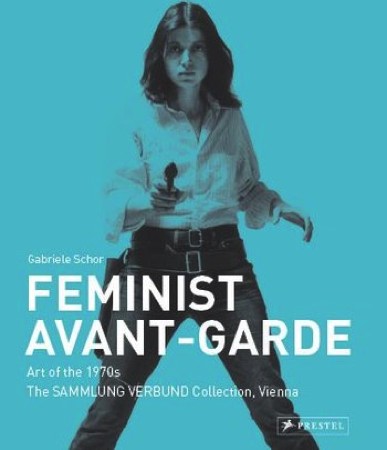
ZKM | Centre for Art and Media Technology, Karlsruhe, GermanyNovember 18th – April 1st 2018
Stavanger Art Museum, Stavanger, Norway, June – September 2018
Dům umění města Brna, Brno, Czech Republic, December 2018 – March 2019.
The Photographers’ Gallery,London, UK, Oct – 29 Jan 2017
My first drawing and Towards new expression (1974)”:
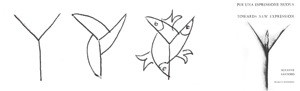
Triskell: feminine symbol of Neolithic origin, Celtic, Indo-European, and Pagan. It becomes the “fish” of Christianity. My Irish great grandfather drew this for me when I was 4. How archaic symbols become transformed: purity-danger-taboo.
Suzanne Santoro 2013
Literary expression was not the only thing to be destroyed. Women’s creative and artistic expression disappear and marks the beginning of the disruption of relationships with men, the other, and everything else! To survive through all this women need to protect their own differences. Always acquiescing to others thinking annihilates our own point of view and leads to a normalized identity and the annihilation of the self.
Suzanne Santoro 2011
Thanks to “Supressed Histories Archives”, Max Dashu, I have been said to be, along with other women artists using the body in their work, as an essentialist. According to Luce Irigaray, nature as a primary function has a good chance of becoming culture once again and might be useful as a strategy. I’m quite sure that nature precedes culture as body perception precedes language. This fact may not yet be symbolically represented as culture but should not be underestimated.
Suzanne Santoro, 2009
“During this period of my research (which preceded and followed publication of Towards New Expression, Rome, Italy 1972-73. I oriented my studies to restoring those characteristics of the female image which had been intentionally hidden or transformed by a whole tradition in the visual arts.I particularly wanted to study objects at close range: the female sexual organ, a shell, the structure of a flower, all those secondary symbols such as architectural details, drapery in Roman statuary, a sarcophagus or other elements in sculpture and painting where it is still possible to perceive a primordial naturalness of female symbols which have gradually become covered up in western art.I am also aware of those elements in the human figure which present both female and male characteristics. This kind of dualism is present in the tradition of the visual arts and attracted me as other ambiguous phenomena that the artist could not reveal directly. I try to uncover a structure of a form in the hidden message which is not immediately apparent.I like to veil the exactitude of details and leave only an indeterminate halo. At other times the meaning is more than clear…”
Suzanne Santoro 1976






 suzannesantoro.com